Show your research to other researchers in medical imaging.
Learn how to apply the latest computational tools to your data.
Find exciting projects that you would like to contribute to.
Meet researchers from a variety of backgrounds.
Connect with industrial partners and explore real-world challenges.
A hackathon is an event where people come together to collaborate intensively on projects over a short period of time, often combining skills from different backgrounds.
The Cardiff Medical Image Computing Hackathon (MIC-HACK) offers students, researchers, and academics the opportunity to work on exciting projects at the intersection of computer science and medical imaging.
Participants of all backgrounds and skill levels are welcome, both from within and beyond Cardiff University. MIC-HACK will also feature invited talks from industry experts and collaborators, as well as free lunch.
This year, the hackathon will also include participation from invited companies, providing opportunities to hear about industry perspectives, explore academia–industry collaboration, and connect with company representatives during dedicated networking activities.
A team led by Snigdha Sen developed microTorch, a new open-source framework for microstructure imaging that leverages the computational power of modern GPUs. The project has since progressed into a final repository repository.
A team led by Bradley Karat and Maëliss Jallais developed a novel approach for realistic noise synthesis and demonstrated its importance in reducing bias and improving precision in supervised medical image inference tasks. The work is now available as a preprint.
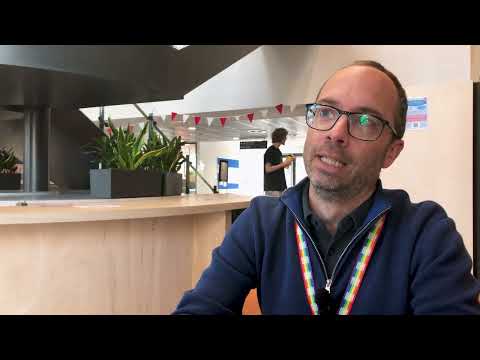
A team led by Joshua Mawuli Ametepe created NIfTI Viewer, a smartphone application that enables direct visualisation of NIfTI files on phones and tablets. The app also supports on-device quantitative analyses, including Diffusion Tensor Imaging (DTI). Watch Joshua’s demo here.
A team led by Thomas Greatrix developed a new approach for automatically labelling pathology reports using ensembles of large language models. The work progressed into a peer-reviewed conference publication at the 2025 International Conference on Artificial Intelligence in Healthcare.
A team led by James Gholam investigated the impact of pulsatile motion on ultra-low-field diffusion-weighted MRI, demonstrating the importance of accounting for physiological motion in this emerging imaging modality. The work was presented at the 2026 ISMRM Annual Meeting. Chek it out here.